Akshaya Tritiya 2026 Fashion: Style Your Festive Look
Festive Lookbook: How to Style Traditional Jewelry for Your Akshaya Tritiya 2026 Celebration

Introduction
Most people spend the days before Akshaya Tritiya thinking about gold prices and puja preparations. Very few stop to ask: what will I actually wear? Yet in Hindu tradition, how you dress on a sacred day is never an afterthought. It is shringar - the act of adorning yourself before the divine - and on Akshaya Tritiya 2026, that intention matters more than the trend. Akshaya Tritiya 2026 fashion trends this year centre on something the last few years of maximalist festive dressing quietly forgot: that fewer, more meaningful pieces always outshine more. Akshaya Tritiya 2026 falls on Sunday, 19 April, and whether you are attending a family puja, heading to the office, or simply marking the day at your home mandir, this lookbook gives you three fully styled approaches - traditional, modern fusion, and minimalist - with outfits, jewellery pairings, sacred pieces, and makeup guidance for each.
Why What You Wear on Akshaya Tritiya Is Part of the Ritual
In Hindu tradition, shringar - the sacred act of adorning oneself - is specifically associated with Goddess Lakshmi, who is honoured on Akshaya Tritiya alongside Lord Vishnu. Yellow is the colour of the day. It carries the energy of Vaishakh's sun, the vibrancy of prosperity, and the warmth of the festival's spirit. Gold is the natural metal. Marigold flowers complete the aesthetic in every region where this day is observed.
When you choose a yellow saree over a plain kurta, when you reach for a piece of jewellery that carries intention rather than just shine, you are not making a fashion decision. You are choosing how you show up - to the puja, to the occasion, to yourself on one of the most auspicious days of the Hindu year.
Read also: Before choosing sacred jewellery for your Akshaya Tritiya look, understand the significance and correct rules for wearing a Tulsi mala
Look 1 - The Traditional: Full Festive in Yellow Silk

This look is for the woman who wants to honour Akshaya Tritiya exactly as it has always been honoured - fully, richly, and without compromise.
The Outfit
A yellow Banarasi or Kanjivaram silk saree is the anchor. Deep turmeric yellow, saffron-gold, or warm mustard - any shade in this family works. The weight and sheen of the silk is the point: it moves like an offering. Pair with a contrasting blouse in gold or deep green with traditional zari work. For those who find sarees difficult to manage through a long puja morning, a yellow Anarkali or silk lehenga in the same colour family works equally well. The silhouette should feel generous and considered - not rushed into.
The Jewellery
A traditional gold choker with matching jhumka earrings and a maang tikka - these are classics for a reason. But what elevates this look beyond convention is the addition of a sacred piece that actually carries intention. The Gold Plated Ram Pendant With Chain - blessed at Ram Mandir in Ayodhya - worn against deep yellow silk creates a completeness, spiritual and visual, that no ordinary gold pendant achieves. Layer with glass bangles in yellow and gold. Keep the hands clean for puja.
The Festive Makeup Look for Puja
Rich occasion, fuller face. A warm base, terracotta blush, deep kohl eyes, kumkum bindi, and a brick-red or deep terracotta lip. The goal is a face that belongs to the occasion - not one dressed up for it. Bold, intentional, and completely in step with the silk.
Look 2 - The Modern Fusion: 2026 Ethnic Wear Lookbook Energy

This look is for the woman who lives between tradition and the contemporary - who wants to observe the festival fully while dressing in a way that feels genuinely hers.
The Outfit
A structured yellow kurta set in chanderi or georgette, paired with straight palazzo pants or a sharara, reads as both festive and modern. The 2026 ethnic wear lookbook has moved away from heavy embroidery toward cleaner cuts with subtle threadwork or block-print detailing at the hem - confidence wearing the fabric, rather than fabric wearing you. A yellow angarakha-style kurta with a subtle print, dupatta draped loosely rather than formally, also works well for an Akshaya Tritiya that moves from puja into a family afternoon.
The Jewellery
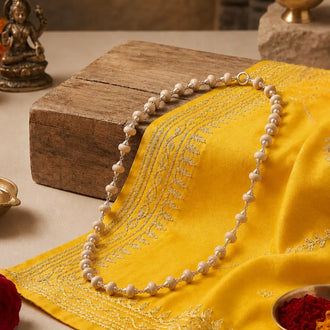
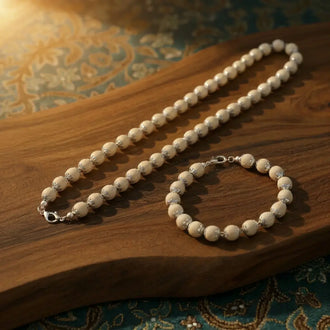
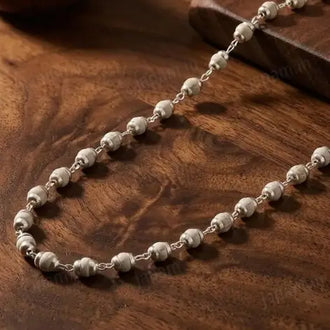
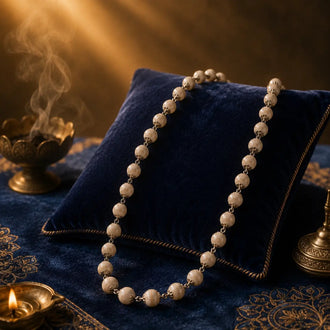
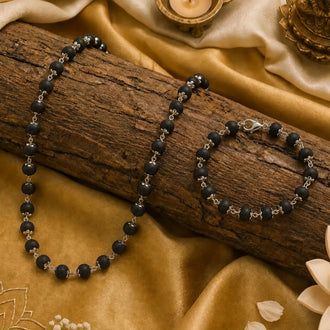
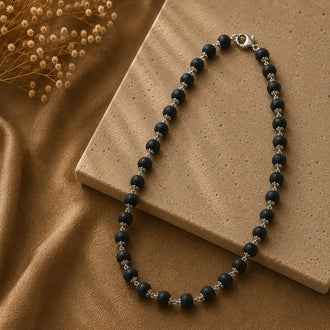
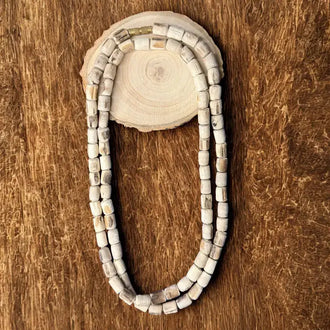
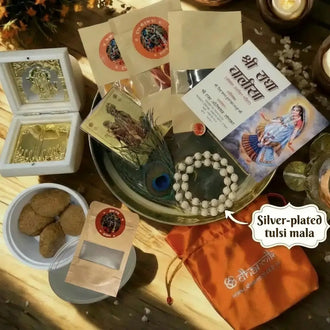
Silver over gold - and sacred silver at that. The Pure 92.5 Silver Tulsi Mala worn as a necklace over a structured kurta sits naturally without overpowering the cut. Pair it with the Silver Plated Tulsi Combo - matching mala and bracelet together - and the jewellery story is intentional, complete, and impossible to call generic. Styling silver ornaments in 2026 is about wearing fewer, better pieces. A Tulsi mala worn with awareness is always a better choice than five stacked bracelets worn by habit.
The Makeup
Lighter here. Dewy base, soft brown shadow, a thin kajal line, nude-pink lip. Let the jewellery and fabric carry the occasion - the face should look present, not performative.
Read also: Choosing between Tulsi and Rudraksha for everyday sacred wear? This comparison helps
Look 3 - The Minimalist: Sacred Simplicity for the Office or Evening Puja
This look is built for two specific people: the working woman who observes Akshaya Tritiya but needs to be at her desk by ten, and the person who simply prefers stillness in their dressing. In both cases, the intention behind each piece outweighs the volume of what is worn.
The Outfit
A solid yellow or ivory cotton kurta in a clean cut - no embroidery, minimal detailing - with tailored pants or a crisp churidar. The minimalist gold jewelry for office trend in 2026 pairs naturally with this: nothing loud, nothing decorative for its own sake. For those comfortable in western silhouettes, a yellow linen shirt tucked into wide-leg trousers reads as appropriately festive without announcing it.
The Jewellery
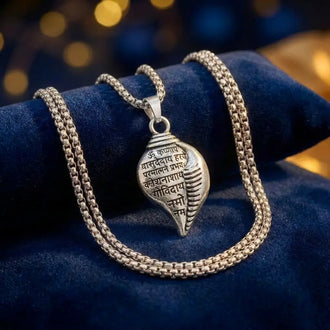
One pendant. One bracelet. That is often enough. The Silver Plated Chain with Krishna Mantra Shankh Pendant worn alone over a plain kurta speaks quietly and with weight - the kind of jewellery someone notices without knowing why, that you reach for during the day because it grounds you. Pair it with the Silver-Plated Tulsi Mala (54 Beads) kept in a pocket or bag, brought out for a quiet moment of japa when the morning rush settles.

The Makeup
As minimal as the outfit. Tinted moisturiser, filled brows, one coat of mascara, rose-tinted lip balm. A small red or golden bindi placed carefully on the forehead does more for the occasion than a full contour. The festive makeup look for puja-then-office does not need to shout.
Jewellery Styling Notes: What Matters Most Across All Three Looks

Across all three looks, one principle applies without exception: on a festival day, one piece of jewellery with spiritual significance outweighs ten pieces chosen purely for decoration.
A gold Ram pendant blessed at Ayodhya, worn against a plain saree, communicates something a stacked neck of generic gold does not. Sacred jewellery carries presence. And on Akshaya Tritiya, presence is the point.
Layer by intent, not by volume. If you wear a Tulsi mala, let it be visible - it is not merely an ornament, and wearing it with that awareness changes the quality of what you carry through the day. If you wear the Krishna Shankh pendant, touch it before your puja begins and again when it is done. These small acts of conscious engagement are the difference between dressing for an occasion and dressing within it. That distinction is what the latest gold jewelry trends 2026 - and their sacred silver counterparts - are quietly pointing toward.
Read also: Not sure if the Tulsi mala you own is genuine? Here is how to identify an authentic one
Frequently Asked Questions
Q: What are the Akshaya Tritiya 2026 fashion trends for women?
The dominant trends favour yellow in all shades - silk sarees, structured kurta sets, and clean minimalist ethnic wear. Jewellery trends prefer intentional sacred pieces like blessed gold pendants and silver Tulsi malas over heavy stacking. The 2026 ethnic wear lookbook is about fewer, more meaningful choices.
Q: What colour to wear on Akha Teej 2026?
Yellow is the traditional and auspicious colour for Akha Teej - associated with Goddess Lakshmi, the sun's energy, and Vaishakh's prosperity. Turmeric yellow, mustard, saffron-gold, and warm ivory are all fitting. Pairing yellow with gold or silver sacred jewellery deepens the visual and spiritual intention of the full look.
Q: What jewelry to wear on Akshaya Tritiya?
The most meaningful jewellery for Akshaya Tritiya combines aesthetic value with spiritual significance - a gold pendant blessed at a sacred dham, a pure silver or silver-plated Tulsi mala, or a Krishna Mantra pendant worn with intention. These elevate any festive look while genuinely aligning with the devotional spirit of the day.
Q: Can I wear silver jewelry on Akshaya Tritiya?
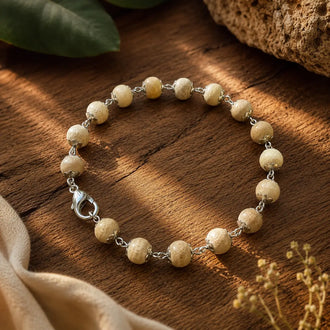
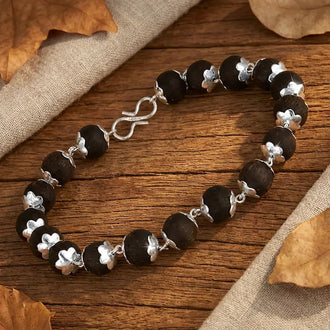
Yes - silver is entirely appropriate and pairs beautifully with modern ethnic wear and minimalist looks. A silver Tulsi mala, Krishna Mantra Shankh pendant, or a silver-plated Tulsi bracelet are all suitable. The key is intention: choose pieces that carry meaning, not just those that match your outfit's metal.
Q: What is a good festive makeup look for puja on Akshaya Tritiya?
For a traditional look: warm kohl eyes, terracotta blush, kumkum bindi, and a deep warm lip. For a modern or minimal look: dewy base, soft eye, and a small gold or red bindi. The bindi itself is the non-negotiable - it belongs on every Akshaya Tritiya face, regardless of how minimal the rest is.
Conclusion
Dressing for Akshaya Tritiya has never really been about fashion. It has always been about shringar - presenting yourself to the divine with care, intention, and a quality of attention that the ordinary day does not usually ask for. The three looks in this lookbook are simply different expressions of that same act.
The traditional look says: today is sacred, and I am dressing to match it fully. The modern fusion look says: I carry this tradition forward on my own terms. The minimalist look says: the intention behind one sacred piece is worth more than the noise of ten.
All three are correct. All three are devotional.
Yellow for the season - turmeric, mustard, saffron, or ivory, in silk, chanderi, cotton, or linen. Sacred jewellery for the day - a gold pendant with a story, a silver Tulsi mala worn with awareness, a Shankh pendant touched before and after puja. A bindi placed with care. These are not style choices on 19 April 2026. They are the way you show up.
When you have chosen your look, explore the full range of Sacred Wearables from Dharmik - gold and silver pieces sourced and blessed from India's holiest dhams, free shipping across India. Because on Akshaya Tritiya, the most beautiful thing you can wear is something that actually means something.
Written by Nayan Khetawat, Dharmik