Diwali Lakshmi Puja: What Each of the 16 Steps Needs

Diwali night does not wait for you. The puja follows a lunar twilight window, not a clock hour, so the date shifts every year and the window itself is narrow. Start late, or realize mid-ritual that one item is missing, and the welcome you planned for Lakshmi starts to feel rushed instead of whole.
This guide fixes that. It gives you the exact date for 2026, the full list of what to gather before you sit down, and the 16 steps of Shodashopachara in the order they are actually performed. Shodashopachara means the sixteen-fold welcome, the same hospitality you would offer an honored guest who has just walked into your home. Lakshmi is treated the same way: seated, bathed, dressed, fed, and thanked, step by step.
Read it once before Diwali evening, not during it. Everything below is in the sequence you will use at the altar, so by the time the diyas are lit, there is nothing left to figure out.
TL;DR
- Lakshmi Puja in 2026 falls on Sunday, November 8, set by Pradosh Kaal, the twilight window after sunset, rather than by the calendar date alone [1].
- Four samagri items have no accepted substitute: panchamrit, lotus flowers, unbroken akshat rice, and camphor, so gather these days ahead rather than hoping to improvise on the night itself.
- The ritual follows the Shodashopachara, sixteen formal courtesies offered to Lakshmi as an honored guest: a seat, water, a bath, fresh clothes, fragrance, food, and light, opening with Ganesha and closing with Kubera and the Aarti [2].
- Skipping one of the four non-substitutable items leaves the welcome feeling unfinished, so treat the samagri list as the first job of the evening, not an afterthought.
Lakshmi Puja Date and Time for 2026: Sunday, Nov 8
Lakshmi Puja in 2026 falls on Sunday, November 8, the evening the Amavasya tithi covers, and the major 2026 panchangs agree on it.
The date is not fixed by the regular calendar day, which is why two almanacs can occasionally disagree on it. Pradosh Kaal, the twilight window that opens at sunset, sets it instead [1]. Every step in this guide, and the Shodashopachara itself, assumes you are working inside that window, so plan the evening around sunset. Don't rely on a clock time printed anywhere else.
Shodashopachara Puja: The 16-Step Welcome for Lakshmi
Shodashopachara is the name for the structure every step in this guide follows. Shodasha means sixteen. Upachara means a courtesy offered with devotion. So, together, the word describes sixteen formal gestures of hospitality offered to Goddess Lakshmi as an honored guest [2].
That framing explains what you are actually doing at each stage. You are not performing a ceremony. You are hosting someone important: a seat, water to wash her feet, a bath, fresh clothes, fragrance, food, and finally light, each offered in its own turn. Sankalp, the invitation, and the Aarti are not separate rituals bolted onto this sequence. They are simply stages of the same welcome.
Once that shape is clear, gathering the right items and following the right order both get a lot simpler. Everything the sixteen steps call for needs to already be in the room before the welcome itself can begin.

Lakshmi Puja Samagri List: What to Gather, and When
Your diwali lakshmi puja samagri checklist starts well before the evening itself. Begin gathering it a day or two ahead rather than the day of. You commonly buy vessels and murtis on Dhanteras, two days before Diwali. Dry goods can be sorted early, and perishables can wait until the day before.
The Master List, By Category
| Category | Items Needed |
|---|---|
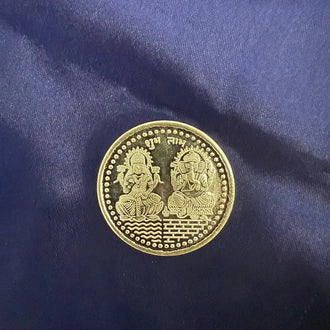
| Murti and Altar Items | Murtis or framed pictures of Lakshmi and Ganesha, a wooden chowki, a fresh red or yellow cloth, akshat to seat the murtis, and coins or account books placed for blessing |
| Kalash and Puja Items | A copper or brass kalash, mango leaves, a coconut, haldi, kumkum, chandan, akshat, dhoop and agarbatti, camphor, panchamrit, gangajal, and marigold and lotus flowers |
| Naivedya (Offerings) | Sweets such as laddoo or kheer, fruit, dry fruits, and a pot of milk |
| Lamps and Aarti Items | A ghee lamp meant to burn through the night, diyas with cotton wicks, mustard or sesame oil, an aarti thali, and a copy of the Lakshmi aarti |
Where You Can Substitute, and What You Cannot
Most of what is on that list accepts a stand-in. Dried petals work in place of fresh flowers. Brass and copper thalis are interchangeable. For the lamps, oil is accepted wherever ghee is traditionally called for.
Four items are different. Panchamrit is a fixed five-part mix of milk, curd, honey, ghee, and sugar, and there is no accepted way to complete it short of all five. Lotus is named as Lakshmi's own flower. No documented substitute exists if you cannot source one. Akshat must be unbroken rice; broken grains do not count. Camphor has no named alternative either, and it is needed for the Aarti at the close of the ritual.
Build these four into your shopping trip now, while there is still time to find them, rather than discovering the gap on the evening itself.
Altar and Kalash Setup Before the Lakshmi Puja Begins
With samagri gathered, three jobs remain before the sixteen-step welcome can begin: readying the home, setting up the altar, and assembling the kalash. None of them is part of the formal sixteen steps. All three have to be finished before step one can start.
Cleaning the Home and Lighting the Diyas
Cleaning the home is meant to purify the mind. Lighting the diyas afterward is meant to dispel ignorance and darkness. Together, these are the readiness signal Lakshmi is said to look for before she enters a home. Treat this as the real start of the evening, not housekeeping that happens to come first. A dim, cluttered room undercuts everything that follows, no matter how correctly you perform the steps after it.
Setting Up the Altar: Idols, Chowki, and Colours
Murtis of Lakshmi and Ganesha, ideally shown seated, are the first act of hospitality. Clay, silver, or brass are all accepted. They sit on a wooden chowki covered with a fresh red or yellow cloth, with a bed of unbroken rice spread underneath for them to rest on. Set the chowki toward the north-east or east of the room. Place the kalash beside it.
Assembling and Placing the Kalash
Puja guides describe the kalash, a small pot of water, in two ways: as "the throne of Lakshmi" and as "the pot of abundance". To assemble one, fill a copper or brass pot with water, drop in a coin, arrange mango leaves around its mouth, and top it with a coconut. Set the finished kalash to the right of the Lakshmi idol, between the deities and where you will sit. It is already standing in for her before the idols themselves are even dressed. That is why it goes down first.

Shodashopachara, Part 1: Purification to Welcoming Lakshmi
Three rites come before the sixteen formal offerings begin: purifying yourself and the space, Sankalp, and inviting Ganesha.
Sit facing east or north on a clean asana, and sprinkle a little water over yourself and the samagri. Take a spoonful of water in your right palm. Sip it three times. Then flick a few drops onto yourself and the altar.
Sankalp follows. It is the one step you speak in your own words rather than recite from memory. Hold rice, a flower, and a coin in your right hand with a little water. Simply state who you are, where you are, and that you are performing this puja for your household's wellbeing.
Inviting Lord Ganesha First
Ganesha is worshipped before Lakshmi so that wisdom and auspicious beginnings arrive before wealth. Offer a drop of water at his feet, a tilak of kumkum and rice on his forehead, a flower, durva grass, and a sweet, then close with the mantra "Om Gan Ganapataye Namah" and a ring of the bell.
Dhyana and Avahan: Meditating On and Formally Inviting Lakshmi
Dhyana comes next. You spend a few quiet moments meditating on Lakshmi seated on her lotus, with no physical offering involved [2]. Avahan follows. You join your palms with the thumbs folded inward, formally inviting her presence into the idol before you.
Offering Lakshmi a Seat, Washing Her Feet, and Sipping Water
You then offer her a seat, five flowers arranged as a throne. You greet her with the words "Shri Lakshmi-Devi, Swagatam" [2]. You pour water over her feet, then offer a separate measure for sipping, the two courtesies that formally open the Shodashopachara proper [2].
Diwali Lakshmi Puja Vidhi, Part 2: Kubera Puja and Prasad
Lakshmi is welcomed and seated, and the rite turns to caring for her as an honored guest: bathing her, dressing her, feeding her, and finally closing with Kubera's invocation and the Aarti.
Bathing and Dressing the Goddess: The Snana and Vastra Stages
The idol receives a ritual bath, or snana, that begins with Panchamrit. For a home altar, this is usually measured at one tablespoon of each ingredient. A rinse of plain water follows, closing the bath before anything else touches the goddess's form.
Dressing is simpler at home than in a full temple rite. A mauli, or a small piece of new cloth draped over the deity, stands in for the saree and jewelry used elsewhere [3]. Chandan, turmeric, kumkum, and sindoor are applied together. The sindoor is placed on Lakshmi's maang, her hair parting, as an act of service marking her as Vishnu's wife.
Flowers, Incense, Hymn, and Food: Steps Eleven Through Fifteen
Flowers, incense, and a small lamp come next, followed by whichever hymn your family knows. The choices are the Shri Suktam, the Lakshmi Chalisa, or the Ashtalakshmi Stotram. Every diwali lakshmi puja mantra used at this stage is short enough to read from a book or phone if the words are not memorized.
Food follows: sweets such as laddoo or kheer, fruit, dry fruits, and a pot of milk. Betel leaves and areca nut are offered last, the way a host offers refreshment once a guest has already eaten.
Dakshina, Pradakshina, Kubera, and the Closing Aarti
Dakshina, an offering of money or valuables, follows the food: coins, notes, jewelry, or account books placed before the goddess for her blessing. The worshipper then circles the space three or seven times clockwise, a gesture called pradakshina.
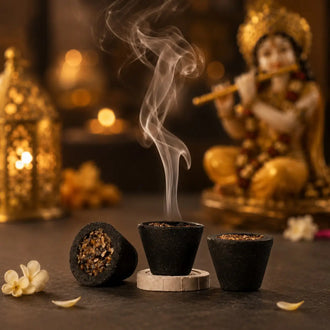
Kubera, the keeper of wealth, is invoked next, closing a frame that opened with Ganesha at the very start of the evening. The diwali lakshmi puja aarti itself uses camphor rather than an oil lamp, since camphor is said to burn away without residue, a symbol of the ego dissolving in devotion. It is lit and circled before the deity, usually to the hymn "Om Jai Lakshmi Mata". Prasad, often laddoo or peda, closes the evening.
Sourcing Certified Items for Your Lakshmi Puja
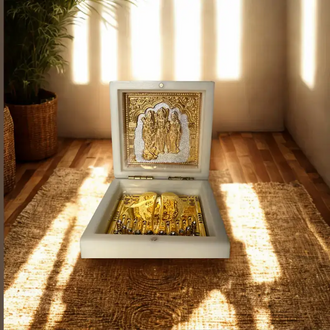
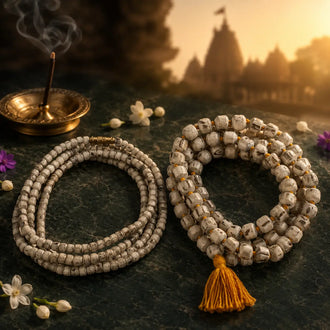
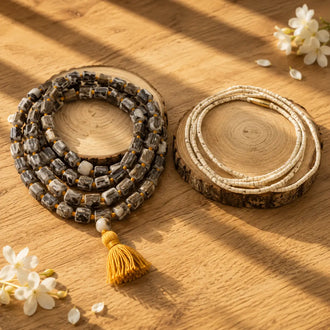
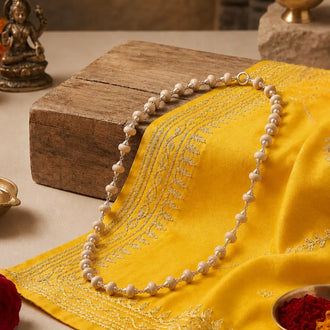
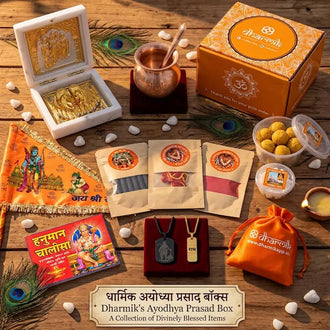
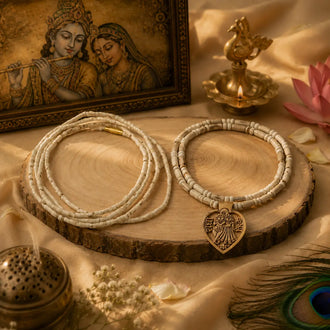
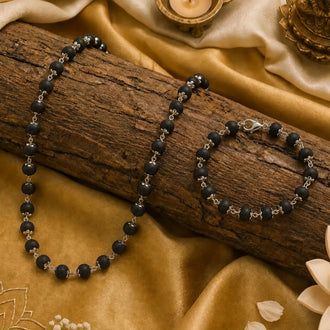
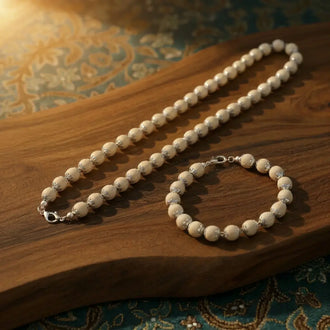
Once the date and the sixteen steps are settled, what's left is making sure what you place on the altar is genuine. Murtis, mala, and mandir decor should come from the places tradition actually calls for, not a factory shelf. Every Dharmik product carries that proof instead of a promise. It is sourced directly from Vrindavan, Ayodhya, and Haridwar, and blessed before it ships. For this Diwali Lakshmi Puja, browse our collection of sourced and blessed puja items to finish gathering your samagri.
Frequently asked questions
How is Lakshmi Puja done on Diwali?
Clean the home and set up the altar. Then invite Ganesha first and welcome Lakshmi through the Shodashopachara: a seat, a bath, fresh clothes, flowers, incense, and food. Close with Kubera's invocation and the Aarti.
What if lotus flowers aren't available for Lakshmi Puja?
There's no documented fallback for lotus, so source it early instead of scrambling that evening. It's one of only four samagri items with no accepted substitute at all.
What if I miss the Pradosh Kaal muhurat on Diwali night?
Go ahead as soon as you can after sunset. Amavasya Tithi still governs the night, and a late start beats skipping the puja altogether.
Can Lakshmi Puja be performed without a priest?
Yes. People commonly perform Diwali Lakshmi Puja at home without one, following the same sixteen steps and speaking Sankalp in words you actually understand.
Can a photo of Lakshmi be used instead of an idol?
Yes, a framed picture works fine in place of a murti, and clay, silver, or brass are equally accepted whichever form you choose.
Sources
- https://navbharattimes.indiatimes.com/astro/religion-rituals/festivals-and-fasts/diwali-2024-laxmi-puja-muhurat-shubh-choghadiya-diwali-par-laxmi-puja-kab-karen/articleshow/114776173.cms
- https://timesofindia.indiatimes.com/life-style/events/happy-diwali-2019-date-time-puja-vidhi-laxmi-pooja-shubh-muhurat-mantra-and-all-you-need-to-know/articleshow/71736550.cms
- https://www.moneycontrol.com/religion/varalakshmi-vratam-2026-complete-list-of-puja-samagri-and-32-step-varalakshmi-puja-vidhi-article-13403565.html