Nirjala Ekadashi Story 2026: Bhima's Sacred Path to Divine Grace

The Nirjala Ekadashi story serves as a profound divine calling for every seeker who feels the weight of worldly attachments and yearns for a path to spiritual awakening. This sacred observance, occurring in the scorching heat of the Jyeshtha month, represents one of the most intense tests of devotion within the Hindu tradition. It asks for more than just a simple fast; it demands a complete surrender of the self through the total abstinence from food and water for over twenty-four hours. This rigorous discipline is not merely about physical endurance but acts as a powerful engine for karmic cleansing and inner transformation. By following the footsteps of the mighty Pandava brother, Bhima, devotees find a way to navigate their spiritual journey even when they struggle with regular disciplines. In this guide, we explore the deep layers of the Nirjala Ekadashi story, unveiling its origins, its strict rituals, and the promise of a soul-level connection that brings one closer to the eternal grace of Lord Vishnu.
Context and Scriptural Foundation of Nirjala Ekadashi
To truly appreciate the depth of the Nirjala Ekadashi story, one must turn to the ancient wisdom of the Padma Purana and the Brahma Purana. These shastras explain that Ekadashi is the personification of the Lord's own energy, manifesting to help humanity overcome the cycle of birth and death. While all twenty-four Ekadashis in a year are significant, the Nirjala variant is considered the most potent. Scriptural references suggest that the merit earned from this single day is equivalent to visiting all sacred dhams like Vrindavan, Kashi, and Ayodhya combined. In our modern age, where distractions are constant, this fast offers a spiritual relevance that goes beyond ritual; it is a mechanism for the soul to reclaim its original, pure state. By observing this fast, a devotee acknowledges that the soul is independent of the body's needs, shifting focus from material survival to divine service. The resonance of this tradition is felt most strongly in the streets of Vrindavan, where the atmosphere is charged with the vibrations of Lord Krishna's eternal pastimes.
When is Nirjala Ekadashi 2026?
| Detail | Information |
|---|---|
| Date | June 25, 2026 (Thursday) |
| Tithi | Jyeshtha Shukla Ekadashi |
| Timing / Muhurat |
Begins: June 24, 2026, at 6:12 PM Ends: June 25, 2026, at 8:09 PM |
| Location | Observed globally with major festivities in Vrindavan and Kashi |
| Ritual Highlights | Total Nirjala (waterless) fast, Vishnu Sahasranama chanting, and water vessel donation |
The Sacred Significance of the Nirjala Ekadashi Story
The Nirjala Ekadashi story is fundamentally a tale of hope for those who find themselves imperfect in their spiritual practices. In the ancient Vedic timeline, the discipline of fasting was a standard part of life, yet even then, some found the rigors difficult to maintain. This specific Ekadashi is known as the "King of Ekadashis" because it encapsulates the essence of sacrifice and single-minded devotion. By abstaining from water during the peak of summer, a devotee burns through layers of accumulated negative karma, purifying the subtle body. The mythology suggests that Lord Vishnu Himself declared this day to be the most dear to Him, promising that those who observe it with full faith would never face the messengers of Yamaraj (the God of Death) but would be escorted directly to Vaikuntha by the Vishnu-dutas.
- Total Purification: The fast cleanses the five elements of the human body, specifically focusing on the internal fire.
- Karmic Absolution: It is believed to negate the sins of a hundred lifetimes if performed with absolute sincerity.
- Universal Grace: Unlike some rituals restricted by caste or age, the spirit of this story is open to all who seek divine love.
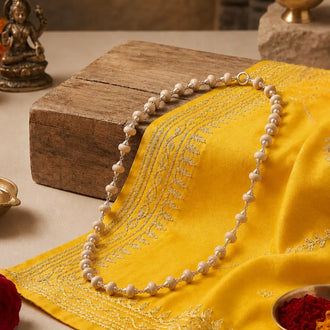
Spiritual Insight: The Vrindavan tradition teaches that Nirjala is not about the suffering of the body but the rejoicing of the soul. When we stop feeding the physical vessel, the spiritual spark within begins to glow brighter, allowing us to perceive the presence of Radha-Krishna more clearly. To enhance your focus, consider using a Tulsi Japa Mala with 108 Original Big Beads for Meditation during your chanting sessions. You can also read more about the Importance of Ekadashi Fasting in our detailed blog post.

The Legend of Bhima: Why It Is Called Pandava Nirjala Ekadashi
The heart of the Nirjala Ekadashi story lies in a conversation between Bhima and the great sage Vyasadeva. Bhima, the second of the Pandava brothers, was known for his legendary strength and his insatiable hunger, fueled by a digestive fire called Vrika. While his brothers Yudhishthira, Arjuna, Nakula, and Sahadeva, along with their mother Kunti and wife Draupadi, easily observed every Ekadashi fast by abstaining from grains, Bhima found it impossible. He loved Lord Krishna dearly, but his physical constitution made him feel like he was failing in his spiritual duties. He approached Sage Vyasa with a heavy heart, asking if there was any way he could attain the same spiritual rewards as his family without having to starve twenty-four times a year.
The Solution Offered by Sage Vyasadeva
Sage Vyasa, the author of the Vedas and a master of spiritual law, looked upon Bhima with compassion. He explained that in the age of Kali, human beings would have shortened lifespans and less endurance, yet the desire for liberation would remain. He told Bhima that there is one specific day-the Shukla Ekadashi of the month of Jyeshtha-that holds the power of all other Ekadashis. If Bhima could observe just this one day without even a drop of water, he would achieve the merit of all twenty-four fasts. Bhima, though intimidated by the challenge, agreed out of pure love for the Lord. This is why the day is often celebrated as Pandava Nirjala Ekadashi or Bhima Seni Ekadashi.
- The Challenge of Vrika: Bhima’s internal digestive fire made hunger feel like physical pain.
- The Power of One: Vyasa’s instruction highlights that quality of devotion often outweighs quantity.
- Bhima’s Success: Despite fainting from thirst, Bhima completed the fast, proving that the Lord provides strength to the sincere.
Spiritual Insight: In the sacred lands of Vrindavan, Bhima's struggle is seen as an example of "Sharanagati" or total surrender. When we admit our weaknesses to the Guru, a path is always made clear. To keep your home environment spiritually charged like the Pandavas' palace, you might install a Krishna Murti Gold-Plated Lord Krishna Idol. Discover more about epic narratives in our post on Spiritual Lessons from the Mahabharata.
The Theology of Tapasya in the Nirjala Vrat Origin Katha
The Nirjala Vrat origin Katha is more than a historical account; it is a theological treatise on the power of Tapasya (austerity). In Hindu philosophy, the senses are like wild horses that need to be tamed. The tongue, which craves both taste and water, is the most difficult to control. By mastering the tongue for one full day, the devotee gains the mental strength to control other impulses like anger, greed, and lust. This fast is strategically placed in the hottest month to maximize the element of sacrifice. Giving up water when the sun is at its peak is the ultimate sign of "Vairagya" or detachment from the material body. This act of self-denial creates a vacuum in the heart that only divine love can fill.
Awakening the Inner Consciousness
The Nirjala Ekadashi story teaches us that when the physical senses are quieted, the "Antaryami" or the indwelling witness becomes active. Most of our lives are spent serving the needs of the flesh, but on this day, we serve the needs of the spirit. The silence of the stomach allows the sound of the Maha-Mantra to resonate more deeply. Devotees often spend the night in "Jagran," staying awake to sing bhajans, which further detaches the consciousness from the cycle of sleep and wakefulness, bringing one closer to the state of "Samadhi."
- Detachment: Consciously choosing to move away from the most basic life-sustaining element-water.
- Willpower: Strengthening the mind to overcome the biological urges of the body.
- Focus: Directing all energy towards the lotus feet of Sri Hari.
Spiritual Insight: The saints of Kashi often say that just as gold is purified in a furnace, the soul is purified in the heat of the Nirjala fast. It is a process of refinement that prepares us for higher spiritual realisations. For those who wish to maintain this purity daily, wearing an Original Tulsi Kanthi Mala Triple Round is highly recommended. Learn about the deeper meaning of these practices in The Power of Hindu Fasting.
Comparing Ekadashi Vrat Observances for Devotees
Choosing the right level of fasting is essential for a sustainable spiritual practice. The Nirjala Ekadashi story provides the ultimate goal, but there are various ways to honor the day based on one's capacity.
| Vrat Type | Purpose | Best For | Recommended Product |
|---|---|---|---|
| Nirjala Vrat | Highest spiritual merit and karmic cleansing. | Healthy adults with strong willpower and devotion. | Monthly Vrindavan Puja Kit |
| Sajala Vrat | Spiritual discipline with hydration maintenance. | Those who cannot withstand heat but want to avoid food. | 108 Tulsi Bead Japa Mala |
| Phalahari Vrat | Gentle detox and focused prayer. | Beginners, elderly, or those with mild health issues. | Prem Tulsi Mala |
| Vrat with Grains Avoided | Basic observance of the sacred tithi. | People with medical conditions requiring frequent meals. | Vrindavan Prasad Box |
Step-by-Step Ritual Flow for Nirjala Ekadashi 2026
To successfully navigate the challenges of the Nirjala Ekadashi story, one must follow a structured ritual sequence. This ensures that the mind remains occupied with the divine rather than the discomfort of the body.
Mandir Setup and Preparation
- Clean the entire altar area on the evening of Dashami (the day before).
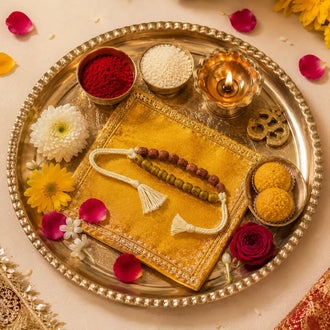
- Place a fresh yellow cloth on the chowki, as yellow is the favorite color of Lord Vishnu.
- Set up your deity or picture of Vishnu or Krishna, and if possible, a small copper pot of water to be donated later.
- Gather your samagri: incense, ghee lamps, yellow flowers, and Tulsi leaves.
The Sequence of the Fast
- Sankalp (Morning of Ekadashi): Stand before the deity and take a firm vow to observe the fast without water. Pray for the strength of Bhima.
- Archanam: Perform a detailed puja, offering Chandan and Tulsi. Tulsi is mandatory; without it, the Lord does not accept the worship.
- Japa: Spend as much time as possible chanting the "Om Namo Bhagavate Vasudevaya" mantra.
- Dana (Charity): It is highly auspicious to donate "Chhatra" (umbrellas), "Jala-Kumbha" (pots filled with water), and hand fans to the needy.
- Parana (Breaking the Fast): On Dwadashi morning, after sunrise, offer food to a Brahmin or the deity first. Break your fast by sipping water with a Tulsi leaf.
Spiritual Insight: Rituals are the vessel, but devotion is the nectar. In Vrindavan, devotees often perform "Parikrama" or circumambulation of the holy hill Goverdhan during this time to further intensify their penance. Enhance your puja with a Silver Plated Bansuri for Thakurji. For more guidance, see Daily Puja Rituals for Beginners.

The Multi-Dimensional Benefits of the Nirjala Ekadashi Story
The benefits of following the Nirjala Ekadashi story are not limited to the afterlife; they manifest in the present moment. From a health perspective, a twenty-four-hour dry fast allows the body's autophagy process to peak, clearing out damaged cells and revitalising the immune system. Spiritually, it creates a sense of "Pratyahara" or withdrawal of the senses, which is a key stage in the Ashtanga Yoga ladder. The mental clarity achieved during the final hours of the fast is often described by devotees as a "thinning of the veil" between the material and spiritual worlds.
- Emotional Stability: Mastering the urge for water builds an unshakable sense of inner peace.
- Ancestral Blessings: Scriptures say that the merit of this fast reaches seven generations of ancestors, helping them progress in their journey.
- Divine Protection: The "Abhaya" or fearlessness granted by Vishnu protects the devotee from worldly anxieties.
Spiritual Insight: True prosperity is the presence of the Lord in one's heart. By observing Nirjala Ekadashi, you are telling the universe that your love for God is greater than your need for life itself. Wear a Gold-Plated Tulsi Mala to carry this protection with you. Explore more in our post on Celebrating Divine Festivals.
Embracing the Inner Transformation from the Nirjala Ekadashi Story
Beyond the physical hunger and the dry throat, the Nirjala Ekadashi story asks us to look at the hunger of the soul. We are all like Bhima-strong in our worldly roles but often struggling in our spiritual commitments. This day is a gift from the sages, a shortcut to divine grace for the sincere heart. When we survive the day without water, we realise that we are not the body but the eternal spirit soul, "Aham Brahmasmi." This realisation is the start of true freedom. The discomfort of the fast is temporary, but the "Sanskaras" or spiritual impressions it leaves on the mind are eternal. It forces us to ask: If I can live without water for the Lord, can I also live without the ego, the pride, and the anger that separates me from Him? Does the tale of Bhima's devotion inspire you to explore the boundless potential of your own spiritual discipline?
Bring Nirjala Ekadashi Home with Dharmik
At Dharmik, we believe that the right tools can elevate your spiritual experience. Our products are "abhimantrit" in the sacred lands of Vrindavan and Kashi, ensuring they carry the pure vibrations of the dhams. For your 2026 Nirjala Ekadashi, prepare with our Monthly Vrindavan Puja Kit, which includes everything from pure chandan to sacred oil. For deep meditation, our Tulsi Japa Mala is an essential companion. If you seek protection and courage like Bhima, the Original 10 Mukhi Rudraksha, blessed in Kashi, is a powerful choice. Finally, celebrate your successful fast with a Vrindavan Prasad Box, bringing the taste of the Dham to your home. Trust Dharmik for lab-certified, sacred essentials.
Frequently Asked Questions about Nirjala Ekadashi
What is the Nirjala Ekadashi story?
The Nirjala Ekadashi story narrates the conversation between Bhima and Sage Vyasa. Since Bhima could not fast on all Ekadashis, Vyasa suggested this single waterless fast as a way to gain the benefits of all 24 fasts throughout the year, emphasizing the power of intense, single-day devotion.
Why is Nirjala Ekadashi considered so powerful?
Nirjala Ekadashi is considered powerful because it involves the highest level of austerity-abstaining from both food and water during the hottest season. Scriptures state that this rigorous discipline purifies all past sins and grants a direct path to the divine abode of Lord Vishnu.
Can pregnant women or children observe Nirjala Ekadashi?
Pregnant women, children, and the elderly are generally advised against the strict Nirjala fast due to health risks. They should instead observe a "Sajala" fast with water or a "Phalahari" fast with fruits, as the Lord values the intention over physical hardship.
What is the best way to break the Nirjala Ekadashi fast (Parana)?
The best way to break the Nirjala Ekadashi fast (Parana) is to perform a morning puja on Dwadashi, offer water and sweets to a Brahmin or the deity, and then consume a small amount of water with a Tulsi leaf before having a light, sattvic meal.
What are the spiritual benefits of Nirjala Ekadashi Vrat?
The spiritual benefits of Nirjala Ekadashi Vrat include the burning of negative karma, the strengthening of willpower, and the attainment of Moksha. It helps the devotee detach from the material body and experience a deeper, soul-level connection with the Supreme Personality of Godhead.
What should be avoided during Nirjala Ekadashi?
During Nirjala Ekadashi, one must strictly avoid water and food. Additionally, spiritual practitioners should avoid day-sleeping, idle talk, anger, and negative thoughts. The focus should remain entirely on chanting, reading scriptures, and remembering the divine pastimes of Lord Vishnu.
Conclusion
The Nirjala Ekadashi story remains a beacon of light for all spiritual aspirants, proving that even the most difficult challenges can be overcome with faith and guidance. From the struggles of Bhima to the profound scriptural promises of Sage Vyasa, this day offers a unique portal to divine grace. By participating in this ancient ritual, we don't just fast; we feast on the nectar of devotion and cleanse our souls for a higher purpose. As 2026 approaches, let us prepare our hearts and homes to welcome the blessings of Sri Hari. May your journey through the Nirjala fast lead you to a state of eternal peace and spiritual awakening. Experience the grace of the Dham with Dharmik.
By Dharmik