Vaishnava Ekadashi Calendar 2026: Smarta vs Vaishnava Dates

Vaishnava Ekadashi is a fasting day calculated by a different rule than the one most calendars use. Smarta practice starts counting from the moment the fasting tithi begins. Vaishnava practice waits for the first sunrise after that tithi has already started. Because of this gap, the two traditions often land on different dates for the same Ekadashi.
This is where most confusion starts. Two apps or panchangs can show different dates for the same Ekadashi, and neither explains why. People end up fasting on the wrong day, or breaking the fast outside the correct window, which is said to erase its benefit entirely.
The Vaishnava Ekadashi calendar 2026 below lines up both traditions' dates, month by month, next to the correct window for breaking the fast.
TL;DR
- Check your own date in the table below before you fast: only three of the year's Vaishnava Ekadashi dates differ from the Smarta date, and the rest fall on the same day.
- Confirm which rule your household follows, sunrise-tithi for Vaishnava or tithi-start for Smarta, since your own city's Panchang can shift any single date by a day.
- Break the fast only after sunrise on Dwadashi, inside that date's own Parana window, rather than assuming one rule covers every Ekadashi alike.
Why Vaishnava Ekadashi Falls a Day Later, and When It Doesn't
Smarta practice treats the fasting day as whichever calendar day the Ekadashi tithi begins on, even if that moment falls in the middle of the afternoon [1]. Vaishnava practice asks a different question. At the sunrise that matters, is the Ekadashi tithi still running? If the tithi starts after a sunrise has already passed, Vaishnava practice pushes the fast to the next sunrise where the tithi is present. That single wait is the whole reason for the one-day gap between the two calendars.
A stricter version of this rule governs some Vaishnava practice, including the ISKCON calendar. Under that version, a day counts as Ekadashi only if the tithi is already running at least two hours before sunrise, not merely present the moment sunrise arrives. That narrower window is why a strict Vaishnava date can differ even from a looser Vaishnava calendar in another city. You can guess the gap this makes. But it does not always happen. As the table below shows, most dates in 2026 do not split at all.
Smarta vs Vaishnava Ekadashi Dates for 2026
Most dates in the Vaishnava Ekadashi calendar 2026 do not split from the Smarta date at all. The table below is built on Delhi's sunrise times [3]. It has a one-day gap on only three of the year's 24 dates. In every other place, both groups fast and feast on the same day.
Local sunrise decides which calendar day an Ekadashi tithi falls on, so a different city's Panchang can still shift any one date here by a day. Brampton and Dubai, for one, at times follow a different one-day pattern than Delhi for the same festival [2]. Check your own city's Panchang before you pick a fasting day. That matters most for the three dates below.
| Month | Ekadashi Name | Smarta Date (2026) | Vaishnava Date (2026) |
|---|---|---|---|
| January | Shattila Ekadashi | Jan 14 | Jan 14 |
| January | Jaya (Bhishma) Ekadashi | Jan 29 | Jan 29 |
| February | Vijaya Ekadashi | Feb 13 | Feb 13 |
| February | Amalaki Ekadashi | Feb 27 | Feb 27 |
| March | Papamochani Ekadashi | Mar 15 | Mar 15 |
| March | Kamada Ekadashi | Mar 29 | Mar 29 |
| April | Varuthini Ekadashi | Apr 13 | Apr 13 |
| April | Mohini Ekadashi | Apr 27 | Apr 27 |
| May | Apara Ekadashi | May 13 | May 13 |
| May | Padmini Ekadashi (Adhika) | May 27 | May 27 |
| June | Parama Ekadashi (Adhika) | Jun 11 | Jun 11 |
| June | Nirjala Ekadashi | Jun 25 | Jun 25 |
| July | Yogini Ekadashi | Jul 10 | Jul 11 |
| July | Shayani Ekadashi | Jul 25 | Jul 25 |
| August | Kamika Ekadashi | Aug 9 | Aug 9 |
| August | Pavitropana Ekadashi | Aug 23 | Aug 24 |
| September | Aja (Annada) Ekadashi | Sep 7 | Sep 7 |
| September | Parsva Ekadashi | Sep 22 | Sep 22 |
| October | Indira Ekadashi | Oct 6 | Oct 6 |
| October | Papankusha Ekadashi | Oct 22 | Oct 22 |
| November | Rama Ekadashi | Nov 5 | Nov 5 |
| November | Utthana Ekadashi | Nov 20 | Nov 21 |
| December | Utpanna Ekadashi | Dec 4 | Dec 4 |
| December | Mokshada Ekadashi | Dec 20 | Dec 20 |
The Dates Where Smarta and Vaishnava Actually Split in 2026
Three dates in 2026 carry the one-day gap. Yogini Ekadashi falls on July 10 for Smarta homes and July 11 for Vaishnava ones. Pavitropana Ekadashi splits the same way, between August 23 and August 24. It is also called Shravana Putrada Ekadashi. Utthana Ekadashi, also called Devutthana Ekadashi, splits between November 20 and November 21.
Not every Panchang agrees on which of these three splits in a given city. Numbers for Brampton and Dubai list Pavitropana as one shared date, August 23, for both groups, with no gap at all [2]. Some local Panchang push Utthana Ekadashi's Vaishnava date to November 22 instead of November 21. This is often why your local temple's date does not match the table above.

Ekadashi Parana Time: When to Break Your Fast
Parana means breaking the fast on Dwadashi, the day immediately following Ekadashi. The full observance spans three days: a single light meal on Dashami to settle the stomach, a strict fast through all of Ekadashi, and then Parana on Dwadashi itself, performed only after sunrise. The window opens once Hari-Vasara has ended and closes before the Dwadashi tithi itself runs out, so its length changes from month to month.
Timing it matters because Parana carries as much spiritual weight as the fast itself. Performing it outside the prescribed window is said to erase the benefit the fast was meant to build. In practice, a devotee offers prayers to Lord Vishnu first. Then they eat something light. Examples include a small amount of rice or a simple sattvic meal. A devotee who sleeps through the window and eats at noon instead has, by this reckoning, fasted for nothing.
Why the Exact Minute Shifts: Hari-Vasara and Case-by-Case Rules
There is no single fixed window. Two 2026 city-Panchang sources each list a separate end-time for every single Ekadashi date. So the date you fasted on decides your real window, not one general number [2]. The marker these numbers are tracking is called Hari-Vasara, roughly the first quarter of the Dwadashi tithi, which tradition still treats as belonging to Lord Vishnu. Devotees wait for Hari-Vasara to end before they eat. Eating while it is still running counts as breaking the fast too early.
The Vaishnava version of this rule works the same way it did for the date itself. What matters is whether the Ekadashi tithi is present at a given sunrise, not which calendar day follows it [1]. Which window applies on a given date comes down to that year's exact tithi mix, so there is no shortcut that skips checking your specific date.
How ISKCON and Panchang Calendars List These Parana Times
ISKCON Bangalore's 2026-27 calendars give a simple instruction for most monthly Ekadashis. That instruction reads "Next day after Sunrise." March 15, April 13, and October 6 are three examples [4]. That phrasing is Panchang shorthand for the Hari-Vasara rule above: wait until sunrise, then let Hari-Vasara pass before eating.
Two dates break the pattern. They confuse people checking the calendar for themselves. July 11, 2026, and August 24, 2026, are both listed under Dwadashi's name rather than Ekadashi's, yet the Parana instruction attached to them is still "Next day after Sunrise" [4]. The label the calendar uses for the day can differ from what a devotee calls their fasting day. The rule for when to end the fast stays exactly the same either way.
Getting Parana Right on Specific 2026 Dates
A handful of Ekadashis add a small step on top of the sunrise rule. Utpanna Ekadashi's Parana falls on the sunrise after Dvadashi begins, once Harivasara has finished. The fast only ends once scholars or people in need have been fed and given gifts.
Mohini Ekadashi carries a similar rule. Before the fast is broken, the tradition calls for a Brahman Bhoj, with donations made and Brahmins fed. Both additions sit on top of the same sunrise-and-Hari-Vasara timing already covered above; they change what you do before eating, not when you do it.
What to Keep Ready for Parana Day
Two habits hold across every date on this calendar. You break the fast only after sunrise, inside the window that your Panchang sets for that specific date. Once that window opens, do not put off Parana. Many devotees keep a Tulsi mala, a ghee diya, and Vishnu puja items ready beforehand. That way, the fast ends with prayer rather than a last-minute scramble. In Vrindavan, Parana is often a shared moment: devotees break the fast together as a communal close to the vrat, or vow.

A Tulsi Mala Ready for Your Next Parana
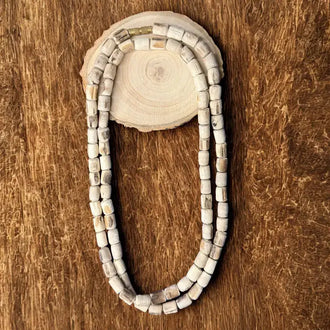
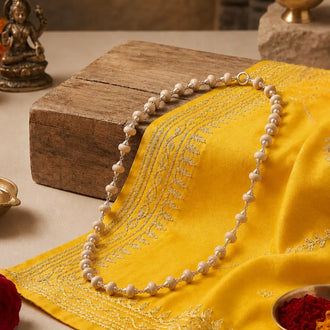
This calendar tells you which date is yours. It also tells you when to break the fast the right way. Many devotees want Parana to end with the right items already in hand: a Tulsi mala, a diya, and puja essentials tied to their roots. Dharmik sources our Tulsi malas and puja items straight from Vrindavan. Each one is blessed through the Hare Krishna Mahamantra before it ships. For your next Parana, our Original Tulsi Japa Mala arrives already blessed and ready, so the fast closes in prayer rather than a last-minute scramble.
Frequently asked questions
Can I follow the Smarta date if that's what my family has always observed?
Yes. Your family priest or temple can tell you which day your household follows [2], and the gap never runs more than a day. Staying consistent matters more than switching mid-practice.
What should I do if I fasted on the wrong Ekadashi date by mistake?
Complete Parana correctly on the day you actually fasted, then simply follow the right date next time. There is no separate correction ritual needed.
Why is ISKCON Ekadashi different?
ISKCON follows the stricter version of the Vaishnava rule, requiring the tithi to run for at least two hours before sunrise. That narrower window can push ISKCON's date a day later than a general Panchang's.
Why are there two Ekadashis in a month?
Every lunar month has two fortnights, one waxing and one waning, and each gets its own Ekadashi. That gives you roughly two dozen Ekadashi dates across the year [1].
Sources
- https://hinduism.stackexchange.com/questions/41248/why-do-smarthas-and-vaishnavas-have-differences-regarding-dates-tithi-of-festi
- https://www.onlinejyotish.com/ekadashi-days.php?y=2026&m=9&loc=brampton
- https://www.drikpanchang.com/vrats/ekadashidates.html?year=2026
- https://www.iskconbangalore.org/vaishnava-calendar/