Hanumanji Birth Date Debate: Chaitra vs Kartik

Understanding the Hanumanji Birth Date Debate: Chaitra vs Kartik Traditions
INTRODUCTION
The Hanumanji birth date debate has intrigued devotees and scholars for centuries, raising a fundamental question: when was Lord Hanuman truly born? While many in North India celebrate Hanuman Jayanti on Chaitra Purnima, several regions in South India observe it on Kartik Krishna Chaturdashi.
This divergence is not merely calendrical—it reflects deeper layers of regional traditions, scriptural interpretations, and devotional practices. Understanding these variations offers insight into how Hindu festivals evolve across geography and time.
In this article, you will learn the origins of both beliefs, how different regions observe Hanuman Jayanti, and how you can choose the right day for your personal worship.
What is Hanuman Jayanti?
Hanuman Jayanti is the sacred festival that commemorates the birth or divine manifestation of Lord Hanuman, the embodiment of strength, devotion (bhakti), and selfless service.
Quick Facts Box
|
Aspect |
Details |
|
|
Deity |
Lord Hanuman |
|
|
Core Principles |
Bhakti (devotion), Seva (service), Shakti (strength), Sankat Mochan (remover of obstacles) |
|
|
Sacred Texts |
Ramayana, Sundarkand, Hanuman Chalisa |
|
|
Main Rituals |
Fasting, chanting, offering sindoor, reciting Hanuman Chalisa |
|
|
Key Offerings |
Betel leaves, oil, laddoos, sindoor |
|
|
Observed In |
All over India (different dates regionally) |
-
Core idea: unwavering devotion to Lord Rama
-
Spiritual goal: overcoming fear, ego, and obstacles
-
Ideal practice: discipline, humility, and service
'Buy authentic Rudraksha mala for Hanuman bhakti' →
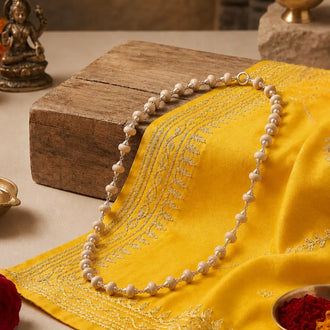
Using a genuine rudraksha mala enhances concentration during japa and aligns your practice with traditional sadhana methods.
The Two Competing Dates Explained
The disagreement around Hanuman Jayanti arises from differing interpretations of Hindu lunar calendars and scriptural traditions. Both dates hold religious legitimacy within their respective traditions.
Chaitra Purnima – The Northern Tradition
Chaitra Purnima, the full moon day of the Hindu month of Chaitra (March–April), is widely accepted in North India as the birth day of Lord Hanuman.
This belief is rooted in Puranic references and is associated with the spring season, symbolizing renewal and divine energy. Temples across states like Uttar Pradesh, Bihar, and Delhi celebrate this day with:
-
Sundarkand recitations
-
Hanuman Chalisa chanting
-
Grand processions
This date also aligns with the broader festive cycle that includes Ram Navami, reinforcing Hanuman’s close association with Lord Rama.
Kartik Krishna Chaturdashi – The Southern Tradition
In contrast, many parts of South India, especially Tamil Nadu and Karnataka, observe Hanuman Jayanti on Kartik Krishna Chaturdashi (October–November).
Here, the emphasis is not necessarily on birth but on Hanuman’s divine manifestation (avataran). Devotees focus on austerity, discipline, and bhakti rather than celebration.
Rituals typically include:
-
Fasting (vrat)
-
Early morning temple visits
-
Offering betel leaves, sindoor, and oil

Scriptural and Historical Interpretations
To understand this divergence, one must examine how Hindu texts are interpreted across regions.
Absence of a Single Authoritative Date
Unlike some festivals, ancient scriptures do not unanimously specify a precise birth date for Hanuman. Texts like the Ramayana and various Puranas emphasize his qualities rather than chronological details.
This absence allowed regional traditions to evolve independently.
Influence of Local Calendars
India follows multiple lunar calendar systems—primarily the Amanta and Purnimanta traditions.
-
North India typically follows the Purnimanta system
-
South India follows the Amanta system
This difference shifts the interpretation of months and tithis, leading to variation in festival dates.
Bhakti Over Chronology
From a philosophical standpoint, the emphasis in Hinduism is often on bhava (devotional feeling) rather than historical precision.
Thus, both dates are seen as spiritually valid, as long as devotion remains sincere.
“Significance of Hanuman Bhakti in Modern Life”
Regional Practices Across India
The variation in dates leads to distinct cultural expressions of Hanuman Jayanti across India.
North India Celebrations
In regions like Delhi and Uttar Pradesh:
-
Temples organize large-scale bhandaras (community feasts)
-
Devotees chant Hanuman Chalisa 108 times
-
Processions with saffron flags and music are common
The mood is celebratory and communal.
South India Observances
In Tamil Nadu and Karnataka:
-
Devotees observe strict fasting
-
Offerings include vada mala (garlands made of vadas)
-
Temples conduct special abhishekam rituals
The tone is more meditative and disciplined.
Maharashtra and Hybrid Traditions
Interestingly, Maharashtra often follows Chaitra Purnima but incorporates elements of both traditions, demonstrating how cultural synthesis occurs.

“Hanuman Jayanti rituals at home”
Comparison Table: Chaitra Purnima vs Kartik Chaturdashi
|
Aspect |
Chaitra Purnima (North India) |
Kartik Krishna Chaturdashi (South India) |
|
Calendar Month |
March–April |
October–November |
|
Lunar Phase |
Full Moon |
Krishna Paksha (waning phase) |
|
Focus |
Birth of Hanuman |
Manifestation/appearance |
|
Ritual Style |
Celebratory |
Austerity and fasting |
|
Popular Regions |
North India |
South India |
|
Associated Festivals |
Ram Navami |
Diwali period proximity |
This table clarifies that the difference is not contradictory but complementary, reflecting diverse spiritual approaches.
How Should Devotees Observe Hanuman Jayanti?
For modern devotees, the question is practical: which date should one follow?
Follow Regional Tradition
If you belong to a particular cultural or familial tradition, it is advisable to follow that lineage. Hindu practice often emphasizes continuity.
Observe Both Dates
Many devotees now choose to observe both days—one as a celebration and the other as a day of austerity. This approach integrates both traditions harmoniously.
Focus on Sadhana
Ultimately, what matters is devotion. Practices such as:
-
Chanting Hanuman Chalisa
-
Wearing a sacred rudraksha mala
-
Offering sindoor and oil
can be performed on either day.
'Buy authentic Rudraksha mala for daily Hanuman bhakti' →
'Explore Rudraksha benefits in spiritual practice' →
Why This Debate Still Matters Today
At first glance, this may appear as a minor calendrical issue. However, it reflects broader themes in Indian civilization.
Unity in Diversity
The coexistence of multiple valid traditions demonstrates the pluralistic nature of Hinduism.
Living Tradition
Festivals are not static—they evolve with geography, community, and interpretation.
Personal Spiritual Agency
Devotees are not bound by rigid orthodoxy. Instead, they are encouraged to engage meaningfully with tradition.
“Types of Rudraksha and their spiritual benefits”
FAQ SECTION
Q1: Why are there two dates for Hanuman Jayanti?
There are two dates for Hanuman Jayanti because India follows different lunar calendar systems and regional traditions. North India celebrates it on Chaitra Purnima, while South India observes Kartik Krishna Chaturdashi. Both are rooted in scriptural interpretations and devotional practices, making them equally valid in their contexts.
Q2: Which is the correct Hanuman Jayanti date?
There is no single universally correct date for Hanuman Jayanti. Both Chaitra Purnima and Kartik Chaturdashi are accepted based on regional traditions and scriptural interpretations. Devotees typically follow their family or regional customs, while some observe both dates to embrace a more inclusive devotional practice.
Q3: Do South India and North India celebrate Hanuman Jayanti differently?
Yes, celebrations differ significantly between regions. In North India, Hanuman Jayanti is marked by festive gatherings, processions, and chanting. In South India, the focus is more on fasting, discipline, and temple rituals. These differences reflect diverse cultural expressions of devotion rather than contradiction.
Q4: Can I celebrate Hanuman Jayanti twice?
Yes, you can celebrate Hanuman Jayanti twice by observing both Chaitra Purnima and Kartik Chaturdashi. Many devotees do this to honor both the birth and manifestation aspects of Hanuman. This approach allows for a balanced practice combining celebration with austerity and spiritual discipline.
Q5: What is the best way to worship Hanuman on his Jayanti?
The best way to worship Hanuman on his Jayanti is through sincere devotion and discipline. Practices include chanting the Hanuman Chalisa, offering sindoor and oil, observing a fast, and engaging in selfless service. Using tools like a rudraksha mala can also help improve focus during prayer and meditation.
CONCLUSION
The debate between Chaitra Purnima and Kartik Krishna Chaturdashi is less about contradiction and more about diversity in devotion. Both traditions offer meaningful pathways to connect with Lord Hanuman—one through celebration, the other through discipline.
Rather than choosing one over the other, understanding their origins allows for a richer spiritual experience. Ultimately, bhakti transcends dates and calendars.
To deepen your daily sadhana and enhance focus during prayers:
'Shop authentic Rudraksha mala for Hanuman devotion' →