Receiving Vrindavan Prasad: A Devotee's Guide to Divine Blessings

Receiving Vrindavan Prasad: A Devotee's Guide to Divine Blessings
By Gaurav Das, Devotional Content Lead. Last updated: 29 October 2026
The morning bells at Banke Bihari temple sound at 4:45 AM for the Mangala Aarti. Receiving authentic Vrindavan Prasad at your doorstep brings the energy of these morning prayers into your home altar. Many devotees feel a distance when they cannot physically walk through the narrow lanes of Loi Bazaar. This guide ensures you know how to handle, store, and consume these items to maintain their spiritual purity. You will be able to perform a complete receiving ritual once your package arrives.
Quick Takeaways
- Wash your hands and face before opening any box containing items from Braj.
- Place items on a clean yellow or red cloth before moving them to your altar.
- Consume perishable sweets within two days of receipt or follow specific storage labels.
- Store non-perishable items like Braj Raj in a dry, elevated spot away from feet.
| Prasad Type | Contents and Use | Storage Duration |
|---|---|---|
| Bhakti Box | Sweets, Tulsi leaves, and dry fruits for immediate family consumption. | 2 to 7 days |
| Nirmalaya | Dried flowers and garlands used for the deity's shringar during aarti. | Permanent |
| Braj Raj | Sacred dust collected from holy sites like Nidhivan or Raman Reti. | Permanent |
| Chandan | Sandalwood paste used for applying tilak to the forehead each morning. | 6 to 12 months |
Why This Matters
Vrindavan is not just a geographical location but the heart of the 84 Kos Braj Parikrama. Every grain of sand and every leaf is considered a witness to the pastimes of Lord Krishna. When you receive items from this land, you are bringing home the vibration of a living pilgrimage site. This guide is a devotional manual to help you maintain the sanctity of these items without the anxiety of doing something wrong. While there is no specific scripture citation for receiving items via post, the tradition of sharing remains central to Vaishnava practice.
The purity of the items depends on the bhav (intention) of the devotee. In Vrindavan, priests at temples like Radha Raman or Govind Dev Ji handle every offering with specific rituals. When these items reach your home, you become the temporary caretaker of that sanctity. Honouring the items correctly ensures your home environment remains receptive to the grace of the Lord. It creates a bridge between your daily life and the spiritual atmosphere of the Yamuna banks. By following these steps, you respect the efforts of the local residents who prepare these offerings with great care.
What You'll Need
Prepare your space before the package from the holy city arrives at your door.
The essentials
- Clean yellow cloth: to provide a pure base for the box.
- Ghee diya: for performing a small welcome aarti.
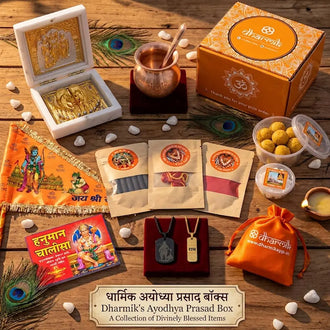
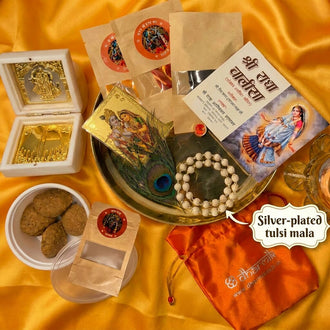
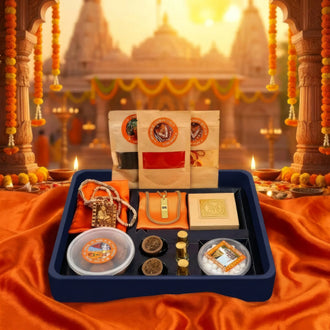
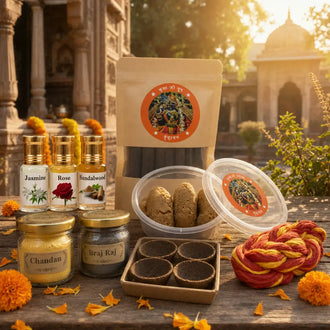
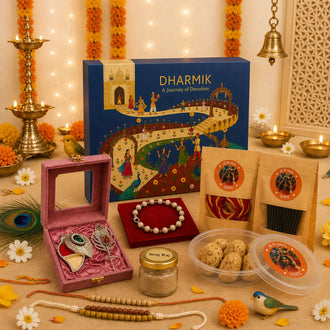
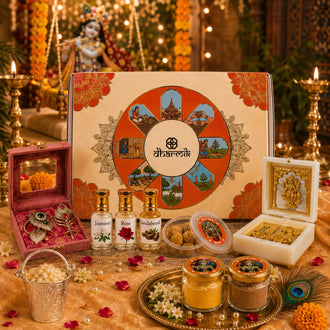
- Vrindavan prasad box: the central collection of blessed items. Vrindavan prasad box
- Copper plate: to hold the sweets for offering.
If you are doing the full vidhi
- Braj Raj dust: for applying to the forehead or mixing in tilak. Braj Raj dust
- Incense sticks: to purify the air before opening the box.
- Gangajal: for purifying the area around the altar.
- Small silver spoon: for distributing the liquid prasad or honey.
Find these items in our Vrindavan collection.

How to Honour Your Vrindavan Prasad
Receiving the Box at Home
When the courier arrives, do not take the box directly to your kitchen or bedroom. Keep it in a clean, elevated place like a table or a shelf near the entrance. Wash your hands and feet before touching the outer packaging. This physical cleaning prepares your body to handle items that have touched the temple floor. Some devotees prefer to sprinkle a few drops of Gangajal on the outer box to symbolically purify it from the journey. Use a dedicated pair of scissors to open the box, rather than kitchen shears used for cutting food packaging.
The Arrival Aarti
Place the opened box on a yellow cloth in your puja room. Light a single ghee diya and three incense sticks. Move the lamp in three clockwise circles around the box while chanting the Hare Krishna Maha Mantra. This small act acknowledges that the contents are a gift from the Lord, not a commercial purchase. It shifts your mindset from a customer to a devotee receiving a blessing. If you have children in the house, let them witness this arrival to teach them the value of items from the holy dham.
Applying the Braj Raj and Chandan
Most boxes include a small packet of Braj Raj or sandalwood paste. Braj Raj is the sacred soil of Vrindavan, often sourced from places like Raman Reti. Take a tiny pinch of this dust and touch it to your forehead or the top of your head. You can also mix a small amount with your daily tilak. Chandan should be applied between the eyebrows to cool the senses and focus the mind during japa. Always use your ring finger to apply these items, as this is the traditional finger used for deity service. Store these in small glass or metal containers to prevent moisture from entering.
Consuming the Sweets
The edible part of the box usually contains Peda, Ladoo, or dry fruits. Offer a small portion to your home deity first if you have a Krishna or Laddu Gopal murti. If you do not have a murti, simply place the plate before a picture of the Lord for a few minutes. This process turns the food into Mahaprasad. Distribute the sweets to all family members, ensuring no part falls on the ground. If a piece does fall, pick it up immediately and place it in a plant pot rather than the bin. Consume perishable sweets quickly to ensure they do not spoil.

Key Benefits of Keeping Vrindavan Items
- Establishes a spiritual connection to the 108 main temples of the Braj region.
- Provides a tangible focus for meditation when you cannot visit the Yamuna banks.
- Cleanses the home atmosphere through the presence of Tulsi and sacred dust.
- Encourages the habit of sharing blessings with neighbours and extended family members.
- Reminds the household of the values of simplicity and devotion found in Nidhivan.
- Acts as a protection for the home when placed on an elevated altar.