The Real Meaning Karma Hinduism Philosophy Teaches Devotees

The Real Meaning Karma Hinduism Philosophy Teaches Devotees
A devotee sits by the Manikarnika Ghat in Kashi at 4:00 AM observing the eternal flames. The real meaning karma hinduism philosophy offers is far more complex than simple retail justice or cinematic revenge. You will learn the specific mechanics of action, the three distinct types of karmic debt, and how to perform selfless service to reach spiritual liberation.
Quick Takeaways
- Karma represents the total sum of physical, mental, and verbal actions performed by a soul.
- Every action leaves a seed or impression called a samskara within the subtle body.
- Liberation is achieved not just through good deeds but through performing duty without attachment.
- Daily meditation and chanting help clear mental impressions and foster clarity in making future choices.
| Concept | Common Myth | Scriptural Reality |
|---|---|---|
| Definition | Bad luck or punishment | Neutral law of cause and effect |
| Control | Everything is predestined | Present actions can shape future outcomes |
| Goal | To get good things | To exhaust all karmic seeds entirely |
| Timing | Immediate results | Results may manifest over many lifetimes |
Why This Matters
Understanding the causal link between our choices and our future state is essential for any seeker in the Vedic tradition. Many people view this law as a system of cosmic reward or punishment, but it functions more like gravity. It is a natural law of the universe that governs the evolution of the individual consciousness through successive births. In the sacred streets of Vrindavan, elders teach that even a single thought directed toward Shri Krishna creates a positive spiritual impression. This framework provides a logical explanation for the apparent inequalities we see at birth and during our lives. It encourages personal responsibility rather than a victim mindset. By recognizing that we are the architects of our own destiny, we find the strength to change our current trajectory. The scripture Bhagavad Gita 2.47 states: "Karmanye vadhikaraste ma phaleshu kadachana". This verse reminds us that we have a right to perform our prescribed duties, but we are not entitled to the fruits of those actions. This teaching is central to the Kashi school of thought, where scholars emphasize that detachment is the only way to stop the cycle of rebirth. For those starting their journey, learning tulsi mala original guide basics can assist in maintaining the focus required for disciplined action.

The Three Categories of Action
The real meaning karma hinduism philosophy provides is divided into three specific categories that explain how our past, present, and future interact. These categories help a devotee understand why certain events happen without apparent cause and how to navigate future decisions with wisdom.
1. Sanchita Karma
Sanchita represents the vast storehouse of all actions from every previous lifetime that have not yet reached fruition. Think of this as a huge warehouse filled with seeds waiting for the right soil and season to sprout. You cannot change these past actions, but you can influence how they manifest through present spiritual practices. In the temples of Ayodhya, devotees offer prayers to reduce the weight of this accumulated storehouse through sincere penance.
2. Prarabdha Karma
Prarabdha is the small portion of the storehouse that has been selected for this specific lifetime. This is what people commonly call fate or destiny, as it determines your family, your physical body, and your lifespan. Like an arrow that has already been shot from a bow, this portion must be lived out until its energy is spent. Wearing a 5 Mukhi Original Rudraksha Mala 108 Beads + 1 Guru Bead, Blessed in Kashi can help a person maintain the mental steady state needed to face these inevitable life events.
3. Agami Karma
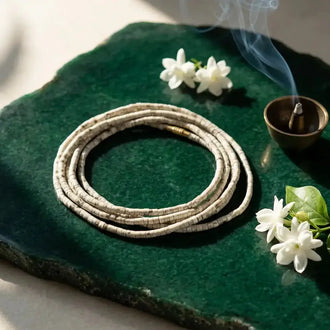
Agami refers to the actions you are performing right now in the present moment. These actions will eventually flow back into the Sanchita storehouse to create future destiny. This is the only area where a human being has complete free will and agency. Every choice you make today, from the food you eat to the words you speak, creates a new seed. Devotees often use Original Tulsi Kanthi Mala Triple Round, 6 mm, Daily Bhakti, Prayer to stay mindful of their Agami actions throughout the day.

Nishkama Karma and Spiritual Freedom
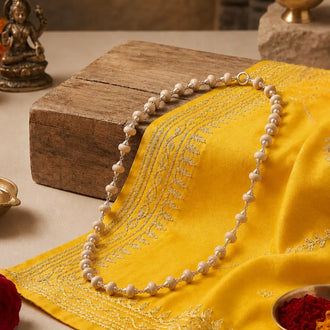
The path to liberation involves a specific method of acting called Nishkama Karma, or action without desire for the result. When we act because we want a specific reward, we create a new bond that ties us to the material world. However, when we perform our duties as an offering to the Divine, no new seeds are added to our storehouse. This is the secret of the Karma Yoga path taught by Krishna on the battlefield of Kurukshetra. It allows a person to live a full life in the world while remaining internally free. A devotee in Kashi might perform the Ganga Aarti as a service to the river goddess without asking for personal favors. This purity of intent is what eventually burns away the older storehouse of deeds. Using a Tulsi Japa Mala with 108 Original Big Beads for Meditation helps in focusing the mind on this selfless state during morning prayers. By shifting the focus from "what will I get" to "how can I serve", the soul begins to untie the knots of worldly attachment. This transformation is the core goal of the entire Vedic social and spiritual structure.
Checklist for Pious Living
- Perform your daily Nitya Karma or obligatory duties without skipping them.
- Practice Dana or charity by giving 10 percent of your earnings to spiritual causes or the hungry.
- Maintain a vegetarian diet to minimize the creation of negative impressions through violence.
- Speak only the truth in a way that is also pleasant and beneficial to others.
- Dedicate at least 15 minutes each morning to chanting with a Original 5 Mukhi Rudraksha Mala 108+1 Beads, 4 mm, Daily Meditation, Blessed in Kashi to center your intentions.
- Treat every guest as a manifestation of the Divine to build positive social seeds.
What is the real meaning of Karma in Hindu philosophy beyond popular media?
The real meaning of this law is far more technical than the "what goes around comes around" trope seen in movies. Popular media often portrays it as a quick moral lesson where a villain gets immediate punishment. In scriptural reality, it is a neutral administrative law of the cosmos that does not distinguish between "good" and "bad" in a human emotional sense. It simply records the vibration and intent behind every movement of the mind and body. Furthermore, the media rarely mentions that the ultimate goal is not to accumulate "good" deeds, but to transcend the system entirely. Even good deeds create a "golden chain" that keeps the soul tied to the cycle of birth and death. To truly understand these nuances, one should study the commentaries of ancient Acharyas or consult a qualified priest. It is also helpful to read about how to use tulsi mala for meditation daily prayer to see how physical tools assist in mental purification.
Common Mistakes to Avoid
- Believing that your destiny is entirely fixed and that you have no power to change your future.
- Thinking that doing one good deed will immediately cancel out one specific bad deed like a bank transaction.
- Blaming others for your current circumstances instead of recognizing the role of your own past choices.
- Performing rituals or charity solely for the purpose of showing off or gaining social status.
- Assuming that only physical actions count, while ignoring the karmic weight of your thoughts and words.
What is the basic karma definition in Hinduism?
The basic karma definition in Hinduism refers to the universal law of cause and effect where every action leads to a corresponding result. This law ensures that the energy a soul puts out into the world eventually returns to it.
How does the law of action affect our daily lives?
The law of action affects our daily lives by creating the circumstances, opportunities, and challenges we face each day. It operates silently in the background, shaping our environment based on the seeds we have planted through previous choices and thoughts.
What is the most important spiritual teaching regarding work?
The most important spiritual teaching regarding work is the practice of Nishkama Karma, which involves performing your duty without attachment to the outcome. By focusing on the quality of the effort rather than the reward, you find lasting peace.
What is a common misconception about karmic retribution?
A common misconception about karmic retribution is that it happens instantly or within the same lifetime. In reality, the results of an action may take many lifetimes to manifest, depending on when the conditions are right for fruition.
Can a person change their real meaning karma hinduism philosophy status?
A person can change their real meaning karma hinduism philosophy status by making conscious, ethical choices in the present moment. While the past cannot be erased, future outcomes are shaped by the Agami actions one chooses today.
Conclusion
True spiritual growth begins when we accept that our current life is a reflection of our past choices and our future depends on our current actions. By understanding the three types of seeds and the power of selfless service, we move closer to liberation. Always remember to act with awareness and treat every duty as a sacred offering to the Divine. You might find that wearing an Original Silver Plated Panch Mukhi Rudraksha Bracelet 17 Beads, 5 mm, Blessed in Kashi helps you stay mindful of this real meaning karma hinduism philosophy during your busy workday. For more guidance on spiritual tools, read about tulsi mala care how long it lasts dos don ts to keep your beads energetically pure.
Written by- Ipshita Jain