How to Tie Lumba Rakhi 2026: Meaning, Vidhi and Bhabhi Traditions
 Lumba Rakhi for Your Bhabhi by Dharmik life">
How to Tie Lumba Rakhi for Your Bhabhi in 2026
By Dharmik Life, Devotional Content Lead. Last updated: 25 July 2026
In the busy markets of Johari Bazaar in Jaipur, sisters look for a specific thread that dangles with beads and silk. The lumba rakhi represents the inclusion of the sister in law into the family circle. This tradition ensures that the protective bond of Raksha Bandhan extends to the brother's wife. You will learn the exact method to perform this ritual and understand the cultural roots of this Rajasthani custom. By the end, you can conduct the ceremony with confidence on 28 August 2026.
Quick Takeaways
- Ties to the bangle or chuda of the bhabhi instead of her bare wrist.
- Symbolises the status of the wife as the ardhangini or half-body of her husband.
- Traditionally originates from Marwari households to ensure a long and happy married life.
- Requires a tilak of roli and akshat before the decorative thread is finally secured.
| Factor | Lumba | Standard Rakhi |
|---|---|---|
| Recipient | Sister in law (Bhabhi) | Brother (Veer) |
| Placement | Bangle or Kada | Right wrist |
| Design | Hanging latkan or tassels | Simple thread or center dial |
| Purpose | Protection of suhaag | Protection of the brother |
| Origin | Rajasthan and Marwar | Pan-Indian tradition |
Why This Matters
The tradition of tying a thread to the brother's wife acknowledges her role as his better half. Scriptural tradition emphasizes that a man is incomplete without his wife during religious ceremonies. The Bhavishya Purana, Uttara Parva explains the merit of the raksha sutra in detail. While the primary festival celebrates the brother, the Rajasthani community introduced the lumba to honor the bhabhi. This practice ensures that the prayer for the brother's longevity includes the woman who sustains his home. In Vrindavan, devotees often tie these threads to the bangles of Shri Radha to seek her eternal protection for their families. It is not just a decoration but a prayer for the suhaag or marital bliss of the sister in law. By tying this, the sister builds a bridge of friendship and mutual support with her new family member. It reinforces the idea that the brother's safety is tied to the well-being of his spouse. This custom has now moved beyond Rajasthan to reach every corner of India. Understanding who can tie rakhi helps you maintain the purity of the tradition while expanding your family circle.
What You'll Need
The lumba rakhi ceremony requires specific items to ensure the bond between sisters in law is properly established.
The essentials
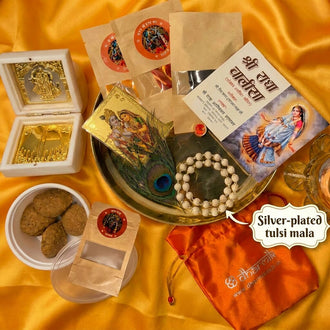
- Lumba thread: the primary hanging thread for the bhabhi's bangle.
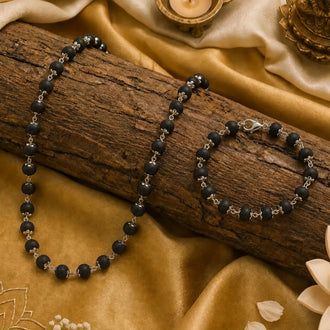
- Tulsi rakhi: a sacred thread for the brother's wrist. tulsi rakhi bracelet
- Roli and Akshat: for the auspicious tilak applied on the forehead.
- Sweets: to offer as bhog to the deities and share among family members.
If you are doing the full vidhi
- Crystal bracelet: a gift to promote peace and emotional balance for the bhabhi. rose quartz bracelet
- Auspicious coin: a traditional gift of wealth and prosperity. silver coin for gifting
- Incense sticks: to purify the puja space before starting the rituals.
- Aarti thali: to perform the ceremonial lamp waving for the couple.
Discover our full selection of sacred threads and gifts in the spiritual jewellery collection.
 Lumba Rakhi by Dharmik life">
Step by Step Vidhi for the Lumba Rakhi
Performing the ritual correctly ensures the spiritual benefits are received by the entire family. Follow these steps during the auspicious muhurat on 28 August 2026. The morning window for the thread puja is from 05:57 AM to 09:48 AM after the Bhadra period ends.
1. Prepare the Puja Thali
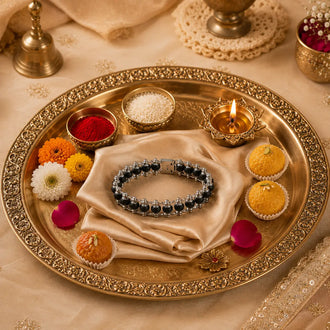
Arrange your thali with roli, akshat, a small lamp, and the threads. Place the sweets on the right side of the plate. Ensure you have both the wrist thread for your brother and the hanging thread for your sister in law. Including all rakhi thali items ensures you do not have to get up during the ceremony.
2. Apply the Tilak
Ask your brother and bhabhi to sit facing East. Apply a tilak of roli on your brother's forehead first, followed by a few grains of akshat. Repeat this for your sister in law. This invokes the presence of the divine and purifies the mind for the ceremony.
3. Tie the Brother's Rakhi
Tie the sacred thread on your brother's right wrist while chanting a protection mantra or a simple prayer. This step must always come before tying the lumba. It establishes the primary bond of protection between the siblings.
4. Tie the Lumba to the Bangle
Take the lumba and tie it to the bangle or chuda of your sister in law's left hand. Ensure it hangs securely. Traditionally, the left hand is chosen because it represents the moon and the receiving of energy. This thread links her fate with the protection you have just invoked for your brother.
5. Perform the Aarti and Offer Sweets
Wave the lighted lamp in a clockwise direction in front of the couple. This aarti removes negative energies and brings auspiciousness. Offer a piece of sweet to your brother and then to your bhabhi. They will then offer you a gift as a token of their love and responsibility toward you.
Key Benefits of the Tradition
- Strengthens Marital Bonds: Tying a thread to the bhabhi acknowledges her as the sustainer of the brother's household and happiness.
- Protects the Family Unity: It brings the sister and sister in law closer, reducing friction and building a foundation of mutual respect.
- Preserves Regional Heritage: Following the Marwari and Rajasthani customs keeps ancient cultural practices alive for the next generation.
- Invokes Spiritual Grace: Using a tulsi kanthi mala or sacred beads nearby during the puja adds a layer of sattvic energy to the event.
- Ensures Emotional Support: The sister in law feels welcomed and valued as a daughter of the house rather than just a relative.

Where is the lumba rakhi tied, and is it required or optional when considering how to tie lumba rakhi?
The lumba is specifically tied to the sister-in-law’s bangle or the chuda worn by the sister-in-law or bhabhi, rather than her bare wrist. This distinguishes it from the thread tied to the brother, as well as the general practice of tying a rakhi. In Rajasthani households, the bangle represents the suhaag or the marital status of the woman, adding depth to the significance of tying the thread. By tying the thread to the ornament that symbolises her marriage, the sister is effectively praying for the longevity of that marriage and honoring the divine feminine while tying rakhi. While the standard Raksha Bandhan, or traditional rakhi, for brothers is a scriptural mandate for many, the lumba tradition, often called bhabhi rakhi, is technically a regional custom. It is not strictly required by the most ancient texts, but it has become a vital cultural practice for family harmony between bhaiya and bhabhi. If your family does not have a history of this tradition, you can easily visit an online rakhi store to find beautiful options and still choose to tie a rakhi to start it as a gesture of love during your raksha bandhan celebration. It is optional but highly recommended for those who wish to build a stronger bond with their brother's spouse, as a sister-in-law is an essential part of the family. You may consult a local priest to understand its deeper spiritual significance if you wish to perform a specific sankalpa for her health and prosperity during the ceremony on the day of raksha bandhan.
Common Mistakes to Avoid
- Tying on the Skin: Avoid tying the lumba directly on the wrist skin as it is designed specifically for the bangle or chuda.
- Wrong Hand Selection: Do not tie the thread on the right hand of the bhabhi because the left hand is the traditional choice for this specific ritual for sisters-in-law.
- Ignoring Bhadra Kaal: Never tie any thread while the Bhadra period is active, as this is considered inauspicious for the brother's longevity.
- Using Incomplete Materials: Ensure the roli is mixed with a little water or gangajal and the akshat grains are not broken before application.
How can I perform the bhabhi ko rakhi kaise bandhe ritual at home?
To answer bhabhi ko rakhi kaise bandhe, you must first apply a tilak of roli and akshat on her forehead. Then, tie the decorative hanging thread to the bangle of her left hand while praying for her prosperity and marital happiness.
Conclusion
The ritual of honoring your brother's wife on 28 August 2026 brings peace and unity to the household. By following the correct vidhi and understanding the timing of the Shravana Shukla Purnima, you ensure the spiritual welfare of your family. Dharmik provides blessed items to make your ceremony authentic and memorable. Remember to check who can tie rakhi to ensure all family members are included correctly. You are now ready to select a lumba rakhi that fits your family tradition.