108 Beads Meaning 2026: Japa Mala Significance & Chanting

Understanding the 108 Beads Meaning in Your Japa Mala
Many devotees, upon picking up a mala for chanting, immediately notice its distinct count of beads. This tradition of using a mala, or rosary, for spiritual practice extends back centuries across Bharat. The specific arrangement, especially the 108 beads, holds deep symbolism in Hindu and Buddhist traditions. It guides practitioners toward sustained spiritual focus and deeper meditation. This guide will help you understand the sacred reasons behind this number and provide clear, practical instructions for effective japa chanting with your mala.
Quick Takeaways
- Japa mala beads serve as a tangible link to cosmic connections and spiritual completeness.
- The sacred number 108 reflects intricate astronomical and yogic concepts.
- The sumeru bead acts as a sacred marker, signifying the start and end of each chanting cycle.
- Mastering proper japa technique significantly enhances spiritual focus and devotional practice.
KEY INFORMATION TABLE
| Step | Japa Mala Chanting Method |
|---|---|
| 1 | Select your mantra and find a peaceful space for practice. |
| 2 | Hold the mala in your right hand, resting on your middle finger. |
| 3 | Use your thumb to move from one bead to the next, never the index finger. |
| 4 | Begin chanting at the bead next to the sumeru bead. |
| 5 | Chant your mantra once for each bead, completing 108 repetitions. |
| 6 | Do not cross over the sumeru (guru) bead; reverse direction after completing a round. |
Why This Matters
The practice of japa, or devotional chanting, is a central pillar of Bhakti Yoga. It helps devotees purify their minds and establish a deeper connection with the Divine. The japa mala, often crafted from sacred materials like Tulsi wood or Rudraksha seeds, serves as a tangible tool for this spiritual discipline. It allows practitioners to maintain focus and accurately count repetitions. The importance of the 108 beads extends far beyond simple counting; it embodies a sacred numerical value deeply rooted in ancient Indian cosmology and spiritual science. For instance, the Brihadaranyaka Upanishad 5.14.1 speaks of the cosmic order, mirroring the numerological significance assigned to 108.
Chanting with a mala helps to calm the restless mind, bringing it to a state of contemplation on the chosen deity. This could be Lord Krishna in Vrindavan, Lord Shiva in Kashi, or Maa Durga. Many malas from Dharmik are abhimantrit in Vrindavan, carrying the sacred vibrations and blessings of this holy land. This spiritual tool is crucial for developing consistent spiritual practice, known as sadhana, which is vital for inner peace, mental clarity, and spiritual growth. Understanding the full spectrum of japa mala types can further enhance your practice; for more details, see our guide on Rudraksha Mala vs. Rudraksha Bracelet. Choosing the right mala for your specific devotion or intention significantly impacts your spiritual journey.

The Main Guide: How to Chant with Your Mala
Chanting japa with a mala is a simple yet potent practice accessible to all seekers. To begin, find a quiet space where you will not be disturbed. This could be a personal altar, a meditation corner, or any serene spot in your home. Sit comfortably, perhaps on a mat or cushion, ensuring your posture is relaxed yet alert. Close your eyes for a moment and take a few deep breaths to settle your mind. Set your intention for the practice. The mala's primary purpose is to help you focus on the mantra, preventing mental wandering and ensuring you complete a consistent number of chants. It acts as a physical anchor for your spiritual concentration.
1. Holding the Mala
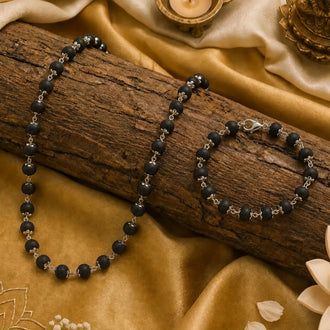
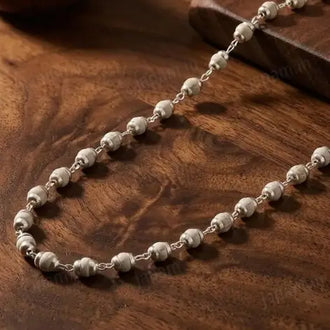
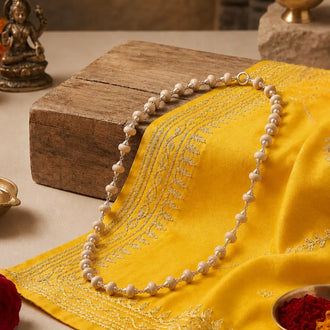
Always hold your japa mala in your right hand. The mala should rest gently on your middle finger, which traditionally represents patience and balance. Use your thumb to gently move each bead. Avoid using your index finger, as it is traditionally associated with the ego, individual self, and pointing outwards, which can detract from the devotional aspect of japa. This practice of holding the mala correctly helps maintain the sanctity of your japa and aligns with ancient spiritual customs. Many devotees prefer a finely crafted mala, such as the Tulsi Japa Mala with 108 Original Big Beads, for its tactile comfort and sacred connection to Lord Krishna.
2. Starting Your Japa
Locate the sumeru bead, often called the guru bead. This bead is typically larger or distinctive in some way, often adorned with a tassel. It serves as a sacred landmark, marking the beginning and end of each round of chanting. It symbolizes the guru principle, representing wisdom and guidance on your spiritual path. Never start or end your chanting on the sumeru bead itself. Instead, begin chanting at the bead immediately next to the sumeru, moving your thumb over each successive bead as you recite your mantra. This respectful handling honors the spiritual energy accumulated in the mala and pays homage to your lineage of teachers.
3. The Chanting Process
As you move each bead with your thumb, recite your chosen mantra once. This could be a personal mantra, a Vedic mantra, or a devotional name like "Om Namah Shivaya" or "Hare Krishna." Repeat the mantra fully and clearly with each bead. Maintain a steady, calm rhythm, allowing your focus to rest on the sound, vibration, and meaning of your mantra. The repetitive nature of japa helps to calm the mind, quiet external distractions, and internalize the spiritual vibration of the mantra. This practice can gradually lead to deeper states of contemplation and inner peace. A high-quality Original 5 Mukhi Rudraksha Mala, blessed in Kashi, can provide an excellent tactile experience for this process, connecting you to Lord Shiva’s energy.
4. Completing a Round
Continue moving beads and chanting until you reach the sumeru bead again. Upon arriving at the sumeru bead, you have successfully completed a round of 108 mantras. It is customary not to cross over the sumeru bead. Instead, gently turn the mala around and begin a new round of chanting in the reverse direction. This act signifies reverence for the guru principle and the continuous, cyclical nature of the spiritual journey. It acknowledges that the sumeru bead embodies the wisdom gained and the guidance received, preventing you from symbolically "stepping over" your guru.
5. The Ganthi Knot
Between each bead on a traditional japa mala, you will often find a small knot, known as a Ganthi. These knots serve several important purposes. Firstly, they keep the beads securely in place, preventing them from scattering if the mala were to break. Secondly, they prevent friction between the beads, ensuring their longevity and smooth movement during chanting. Most importantly, the Ganthi knots symbolize the continuity of spiritual practice and the distinct separation of each mantra, making it easier to move individual beads and ensure precision in your counting. They also represent the sacred bond that holds spiritual truths together.
6. Caring for Your Japa Mala
Your japa mala is a sacred tool and should be treated with respect and care. When not in use, keep it in a clean, sacred place, ideally in a mala pouch made of natural fabric. This protects it from dust, impurities, and negative energies. Avoid letting your mala touch the ground, as it is considered disrespectful to the spiritual energy it holds. Periodically, you may gently clean your mala according to its material (e.g., wipe Tulsi with a damp cloth, gently clean Rudraksha with a soft brush). Energizing your mala by placing it on your altar or chanting a special mantra over it can also enhance its spiritual potency. For a complete set for your practice, consider a Premium and Authentic Rudraksha Mala & Panch Mukhi Rudraksha Bracelet Combo.

Benefits of Japa Mala Chanting
- Enhanced Focus: The tactile movement of beads provides a tangible anchor for the mind, helping to maintain concentration and prevent wandering thoughts during chanting sessions.
- Spiritual Discipline: Regular use of a mala builds consistent spiritual habits, fostering a deeper, more disciplined connection with your chosen deity or spiritual path over time.
- Mental Clarity: Repetitive mantra chanting calms the nervous system, reducing mental clutter, stress, and anxiety, thereby promoting a profound sense of inner peace and tranquility.
- Counting Made Easy: Malas simplify the process of tracking mantra repetitions, allowing devotees to focus purely on the sound, vibration, and meaning of the mantra without the distraction of counting.
- Positive Vibrations: Sacred materials like Tulsi and Rudraksha in a mala are believed to naturally carry and amplify divine energy, enhancing the spiritual effects and benefits of chanting.
- Deepened Meditation: Using a mala can guide practitioners into deeper states of meditation, moving beyond superficial thoughts and fostering a more profound connection to their inner self and the Divine.
- Cultivates Patience: The repetitive nature of japa teaches patience and perseverance, essential qualities for spiritual growth and navigating life's challenges with equanimity.
- Spiritual Protection: Many traditions believe that consistently chanting with a consecrated mala builds a protective spiritual aura around the practitioner, shielding against negative influences.
Investing in a well-made mala can significantly support and deepen your japa practice. Consider an Authentic Rudraksha Mala with Brass Damru & Trishul Pendant, blessed in Kashi, to enhance your spiritual journey and connection to Lord Shiva.
Why exactly 108 and not 100 or another round number?
The choice of 108 as the number of beads in a japa mala is far from arbitrary; it holds immense numerical, astronomical, and spiritual resonance across various ancient traditions. This specific number is considered sacred due to its numerous profound associations found in Vedic texts and cosmology. In Hindu philosophy, there are said to be 108 Upanishads, texts considered foundational to spiritual knowledge and wisdom. It is also believed that there are 108 major nadis, or energy channels, in the subtle body, which converge at the heart chakra. Chanting 108 times purifies these intricate pathways, aligning one with universal energy and inner balance.
Astronomically, the number 108 connects to the sun, moon, and earth in a remarkable way. The average distance of the sun from Earth is approximately 108 times the sun's diameter. Similarly, the average distance of the moon from Earth is about 108 times the moon's diameter. Furthermore, in Indian astrology, there are 27 nakshatras (lunar mansions), and each nakshatra is divided into four padas (quarters), yielding a total of 27 x 4 = 108. Many deities have an Ashtottara Namavali, a sacred list of 108 names, recited during worship to invoke their full blessings and qualities. This extensive web of meaning reinforces why 108 is chosen for japa malas, offering a complete and auspicious cycle of prayer that connects the devotee to cosmic principles. For insights on connecting with your mala, refer to our guide on Kanthi Japa Mala.
Common Mistakes to Avoid
- Skipping the Sumeru Bead: Never chant over the sumeru or guru bead. Always reverse direction for the next round. Crossing it is seen as disrespectful to the guru principle and the spiritual journey it represents.
- Using the Index Finger: Traditionally, only the thumb moves the beads, resting on the middle finger. The index finger is associated with the ego and judgment, making it unsuitable for devotional practice.
- Losing Count: While devotion is key, the mala's purpose is to accurately count repetitions. Try to maintain focus on each recitation to ensure the full spiritual benefit of the 108 cycles.
- Improper Storage: Keep your mala in a clean, sacred place, perhaps in a consecrated pouch, when not in use. This maintains its sanctity and protects it from impurities or negative energies.
- Allowing it to Touch the Ground: Malas are sacred objects, imbued with spiritual energy. Protecting them from physical impurity by avoiding contact with the floor is a sign of respect for your practice.
- Chanting Without Intention: Simply moving beads without a focused mind or clear intention can diminish the spiritual impact. Cultivate a sense of devotion and purpose with each mantra.
FAQs
What is the spiritual significance of 108 beads in mala?
The spiritual significance of 108 beads in a mala is tied to various cosmic and spiritual concepts. It represents completeness and wholeness, connecting to the 108 Upanishads, 108 primary nadis in the body, and astronomical distances related to the sun and moon. Chanting 108 times aligns a devotee with these universal energies and sacred knowledge.
Why do japa malas have 108 beads?
Japa malas have 108 beads due to deep-rooted ancient beliefs that regard this number as sacred and auspicious. The number 108 is seen in astrological calculations like 27 nakshatras multiplied by four padas, and in the number of names for various deities in Ashtottara Namavali, making it ideal for spiritual repetition and complete cycles.
How do I do japa with mala effectively?
To do japa with mala effectively, hold it in your right hand, using your thumb to move each bead over your middle finger as you chant your mantra. Start next to the guru bead and reverse direction when you reach it, never crossing over. Consistency in practice, clear intention, and focused recitation are key for maximum benefit.
What is the sumeru bead meaning and its importance?
The sumeru bead meaning, also known as the guru bead, signifies the beginning and end of a japa round. It represents the guru principle and the spiritual wisdom gained through practice. It acts as a sacred marker, reminding practitioners not to cross over it, symbolizing reverence, respect for lineage, and the cyclical nature of spiritual endeavor.
Can anyone use a japa mala for meditation?
Yes, anyone can use a japa mala for meditation, regardless of their background or specific spiritual path. Malas are universal tools for focusing the mind, aiding in mantra recitation, and fostering inner peace. Many traditions incorporate malas for concentration and devotional practice, welcoming all sincere practitioners seeking spiritual growth and inner stillness.
Conclusion
The journey with a japa mala is a deeply personal and enriching spiritual practice. Understanding the 108 beads meaning unlocks a deeper appreciation for this ancient tool, connecting you to centuries of devotion and cosmic wisdom. By following the proper chanting techniques, maintaining reverence, and consistently practicing, you can cultivate a steady, focused mind and significantly enhance your spiritual growth. Let your mala be a constant companion on your path, a tangible reminder of your aspirations and devotion. Explore our range of authentic japa malas, each abhimantrit to bring sacred vibrations and blessings to your practice directly from Vrindavan.
By Vibhu Airan